Person · one of several with this name
Mary Magdalene
Also called Magdalene
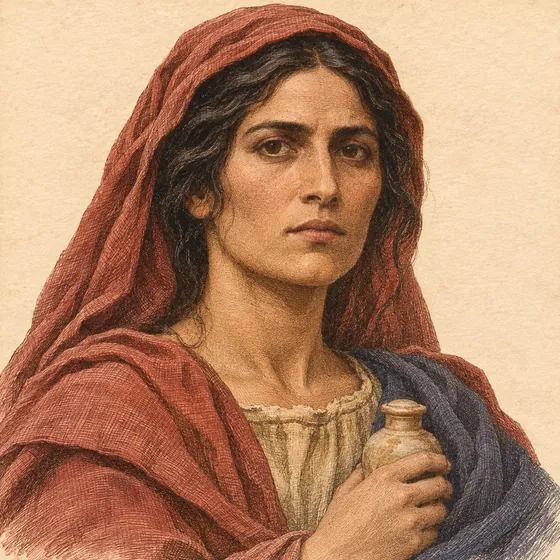
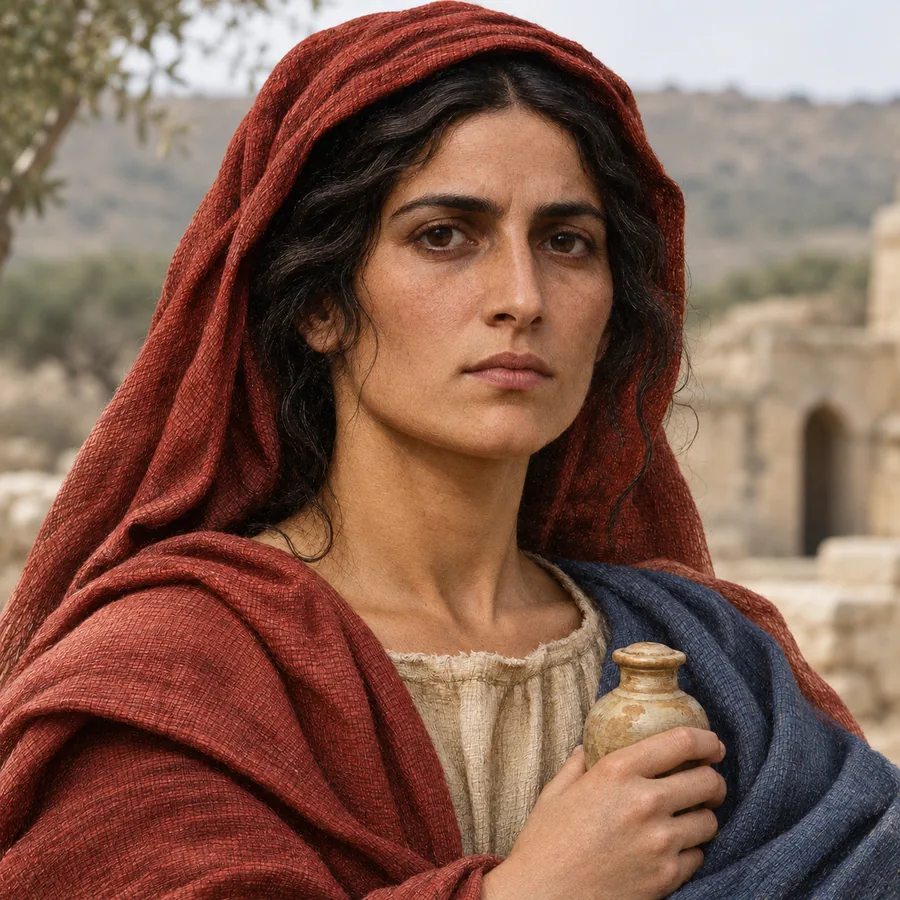

A follower of Jesus from whom, Luke says, seven demons had gone out; the Gospels place her at the crucifixion and at the empty tomb.
See Luke 8:2, Mark 15:40, John 20:1, John 20:18.
 The empty tomb marks Mary Magdalene in the reading view: she came to the tomb early and saw the stone taken away (John 20:1).
Mentioned in 14 verses across 4 books, first in Matthew 27:56. The verses below are the ones linked to this person (the Theographic dataset, with our sourced corrections).
How artists have pictured her
3 works from different centuries and traditions. Each shows how its time and place imagined Mary Magdalene, not how she looked.


In these stories
In the Bible
All 3 verses in Matthew, in Bible order. Text from the Berean Standard Bible; verse numbers follow the KJV.
Matthew
- Matthew 27:56
Among them were Mary Magdalene, Mary the mother of James and Joseph, and the mother of Zebedee’s sons.
- Matthew 27:61
Mary Magdalene and the other Mary were sitting there opposite the tomb.
- Matthew 28:1
After the Sabbath, at dawn on the first day of the week, Mary Magdalene and the other Mary went to see the tomb.
Events
Events the dataset lists Mary Magdalene as taking part in. Dates follow its Ussher–Jones reckoning (one of several traditional counts), not established history.
- c. AD 28Jesus' 2nd Tour of Galilee
- no dateResurrection and Ascension
- no dateCrucifixion and Burial
Dictionary
From Easton’s Bible Dictionary (1897), as attached to this record by Theographic. The entry is for the name and can describe more than one person who bore it. Easton wrote in 1897, and some of his views are now debated.
Read Easton’s entry
A surname derived from Magdala, the place of her nativity, given to one of the Marys of the Gospels to distinguish her from the other Marys (Matt. 27:56, 61; 28:1, etc.). A mistaken notion has prevailed that this Mary was a woman of bad character, that she was the woman who is emphatically called “a sinner” (Luke 7:36-50).