Person
Isaac

In Genesis 21–35, the son promised to Abraham and Sarah. Abraham is told to offer him as a sacrifice and is stopped; later he is the father of Esau and Jacob.
See Genesis 21:3, Genesis 22:2, Genesis 22:12, Genesis 25:26.
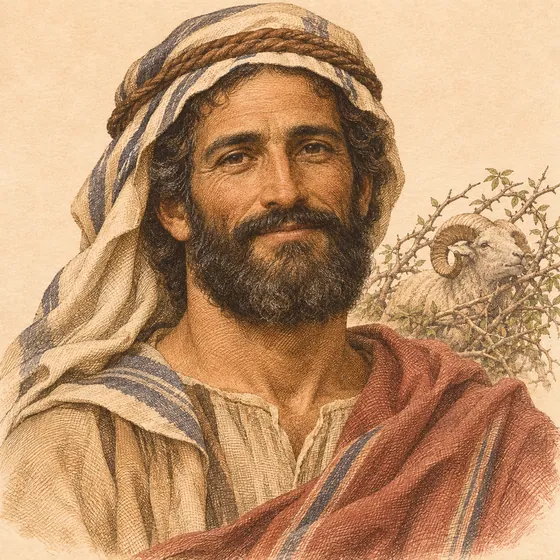
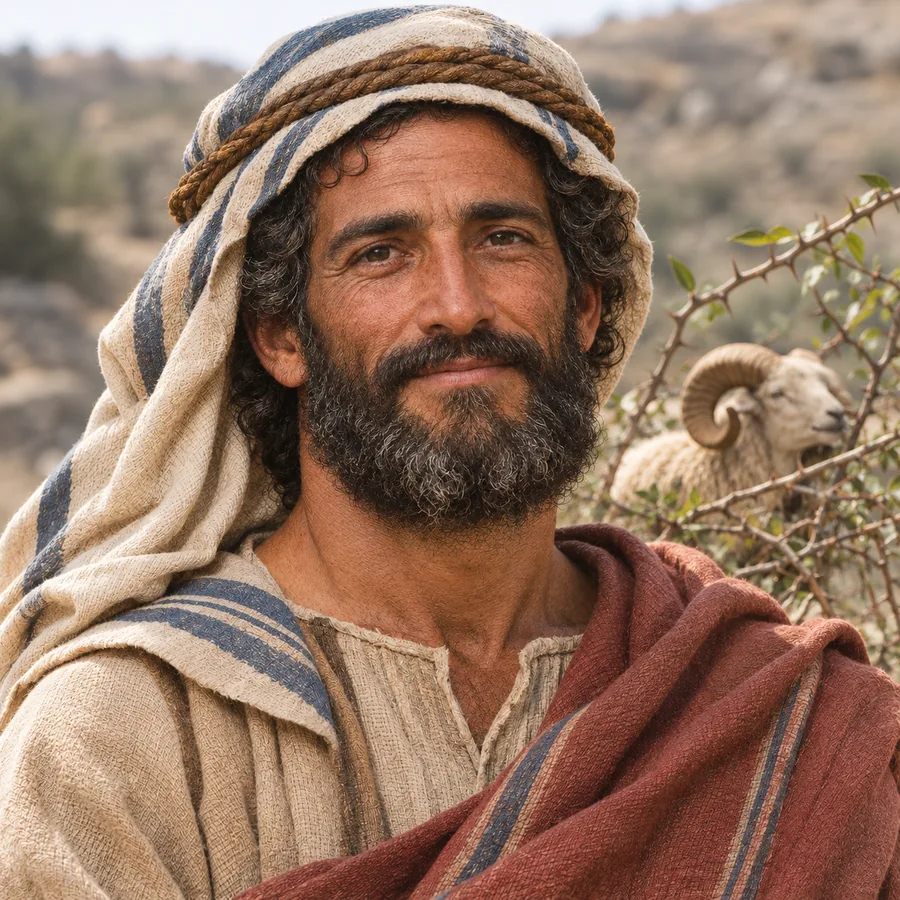
 A ram caught in a thicket marks Isaac in the reading view: the ram offered in his place (Genesis 22:13).
Mentioned in 123 verses across 21 books, first in Luke 3:34. The verses below are the ones linked to this person (the Theographic dataset, with our sourced corrections).
How artists have pictured him
3 works from different centuries and traditions. Each shows how its time and place imagined Isaac, not how he looked.


In these stories
Questions about this
In the Bible
All 3 verses in Luke, in Bible order. Text from the Berean Standard Bible; verse numbers follow the KJV.
Luke
- Luke 3:34
the son of Jacob, the son of Isaac, the son of Abraham, the son of Terah, the son of Nahor,
- Luke 13:28
There will be weeping and gnashing of teeth when you see Abraham, Isaac, Jacob, and all the prophets in the kingdom of God, but you yourselves are thrown out.
- Luke 20:37
Even Moses demonstrates that the dead are raised, in the passage about the burning bush. For he calls the Lord ‘the God of Abraham, the God of Isaac, and the God of Jacob.’
Events
Events the dataset lists Isaac as taking part in. Dates follow its Ussher–Jones reckoning (one of several traditional counts), not established history.
- c. 1896 BCBirth of Isaac
- c. 1896 BCLifetime of Isaac
- c. 1856 BCIsaac Marries Rebekah
- c. 1836 BCBirth of Jacob and Esau
- c. 1716 BCDeath of Isaac
Dictionary
From Easton’s Bible Dictionary (1897), as attached to this record by Theographic. The entry is for the name and can describe more than one person who bore it. Easton wrote in 1897, and some of his views are now debated.
Read Easton’s entry
The only son of Abraham by Sarah. He was the longest lived of the three patriarchs (Gen. 21:1-3). He was circumcised when eight days old (4-7); and when he was probably two years old a great feast was held in connection with his being weaned.
The next memorable event in his life is that connected with the command of God given to Abraham to offer him up as a sacrifice on a mountain in the land of Moriah ([Gen. 22](/gen#Gen.22)). When he was forty years of age Rebekah was chosen for his wife ([Gen. 24](/gen#Gen.24)). After the death and burial of his father he took up his residence at Beer-lahai-roi (25:7-11), where his two sons, Esau and Jacob, were born (21-26), the former of whom seems to have been his favourite son (27, 28).
In consequence of a famine (Gen. 26:1) Isaac went to Gerar, where he practised deception as to his relation to Rebekah, imitating the conduct of his father in Egypt (12:12-20) and in Gerar (20:2). The Philistine king rebuked him for his prevarication.
After sojourning for some time in the land of the Philistines, he returned to Beersheba, where God gave him fresh assurance of covenant blessing, and where Abimelech entered into a covenant of peace with him.
The next chief event in his life was the blessing of his sons (Gen. 27:1). He died at Mamre, “being old and full of days” (35:27-29), one hundred and eighty years old, and was buried in the cave of Machpelah.
In the New Testament reference is made to his having been “offered up” by his father (Heb. 11:17; James 2:21), and to his blessing his sons (Heb. 11:20). As the child of promise, he is contrasted with Ishmael (Rom. 9:7, 10; Gal. 4:28; Heb. 11:18).
Isaac is “at once a counterpart of his father in simple devoutness and purity of life, and a contrast in his passive weakness of character, which in part, at least, may have sprung from his relations to his mother and wife. After the expulsion of Ishmael and Hagar, Isaac had no competitor, and grew up in the shade of Sarah’s tent, moulded into feminine softness by habitual submission to her strong, loving will.” His life was so quiet and uneventful that it was spent “within the circle of a few miles; so guileless that he let Jacob overreach him rather than disbelieve his assurance; so tender that his mother’s death was the poignant sorrow of years; so patient and gentle that peace with his neighbours was dearer than even such a coveted possession as a well of living water dug by his own men; so grandly obedient that he put his life at his father’s disposal; so firm in his reliance on God that his greatest concern through life was to honour the divine promise given to his race.”, Geikie’s Hours, etc.