Person
Sarah
Also called Sarai
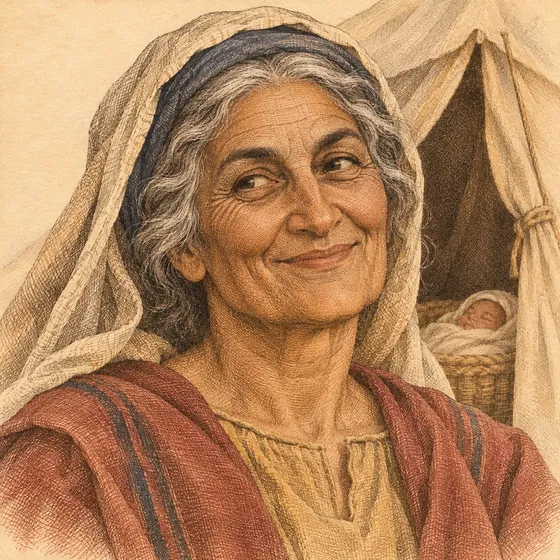
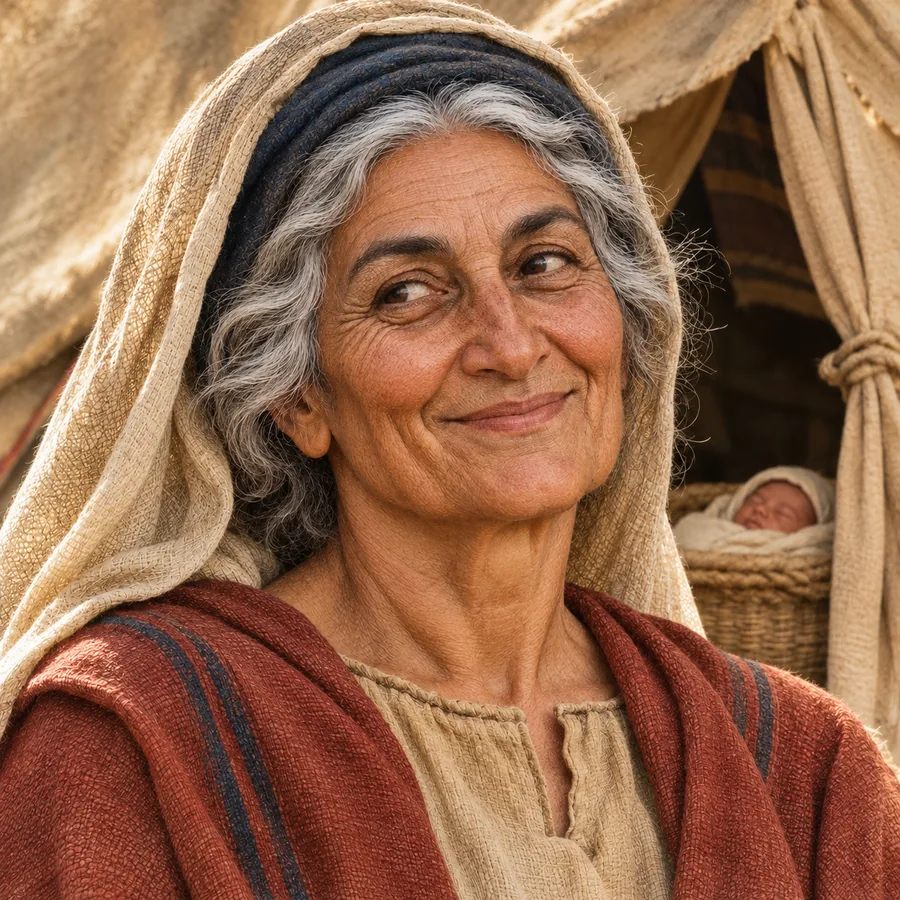

In Genesis 11–23, Abraham's wife. Childless into old age, she laughs at the promise of a son, then gives birth to Isaac.
See Genesis 11:30, Genesis 18:12, Genesis 21:2.
 A tent door and a newborn marks Sarah in the reading view: she listened at the tent door to the promise of a son (Genesis 18:10, Genesis 21:2).
Mentioned in 48 verses across 5 books, first in Isaiah 51:2. The verses below are the ones linked to this person (the Theographic dataset, with our sourced corrections).
How artists have pictured her
3 works from different centuries and traditions. Each shows how its time and place imagined Sarah, not how she looked.


In these stories
In the Bible
All 1 verse in Isaiah, in Bible order. Text from the Berean Standard Bible; verse numbers follow the KJV.
Isaiah
- Isaiah 51:2
Look to Abraham your father, and to Sarah who gave you birth. When I called him, he was but one; then I blessed him and multiplied him.
Events
Events the dataset lists Sarah as taking part in. Dates follow its Ussher–Jones reckoning (one of several traditional counts), not established history.
- c. 1921 BCAbraham enters Canaan
- c. 1921 BCAbraham goes to Egypt
- c. 1921 BCSojourn in Canaan and Egypt
- c. 1896 BCBirth of Isaac
Dictionary
From Easton’s Bible Dictionary (1897), as attached to this record by Theographic. The entry is for the name and can describe more than one person who bore it. Easton wrote in 1897, and some of his views are now debated.
Read Easton’s entry
Princess, the wife and at the same time the half-sister of Abraham (Gen. 11:29; 20:12). This name was given to her at the time that it was announced to Abraham that she should be the mother of the promised child. Her story is from her marriage identified with that of the patriarch till the time of her death. Her death, at the age of one hundred and twenty-seven years (the only instance in Scripture where the age of a woman is recorded), was the occasion of Abraham’s purchasing the cave of Machpelah as a family burying-place.
In the allegory of Gal. 4:22-31 she is the type of the “Jerusalem which is above.” She is also mentioned as Sara in Heb. 11:11 among the Old Testament worthies, who “all died in faith.”