Person · one of several with this name
Deborah
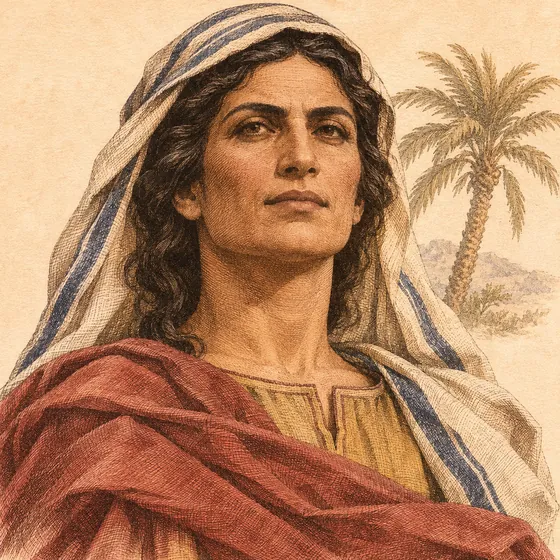
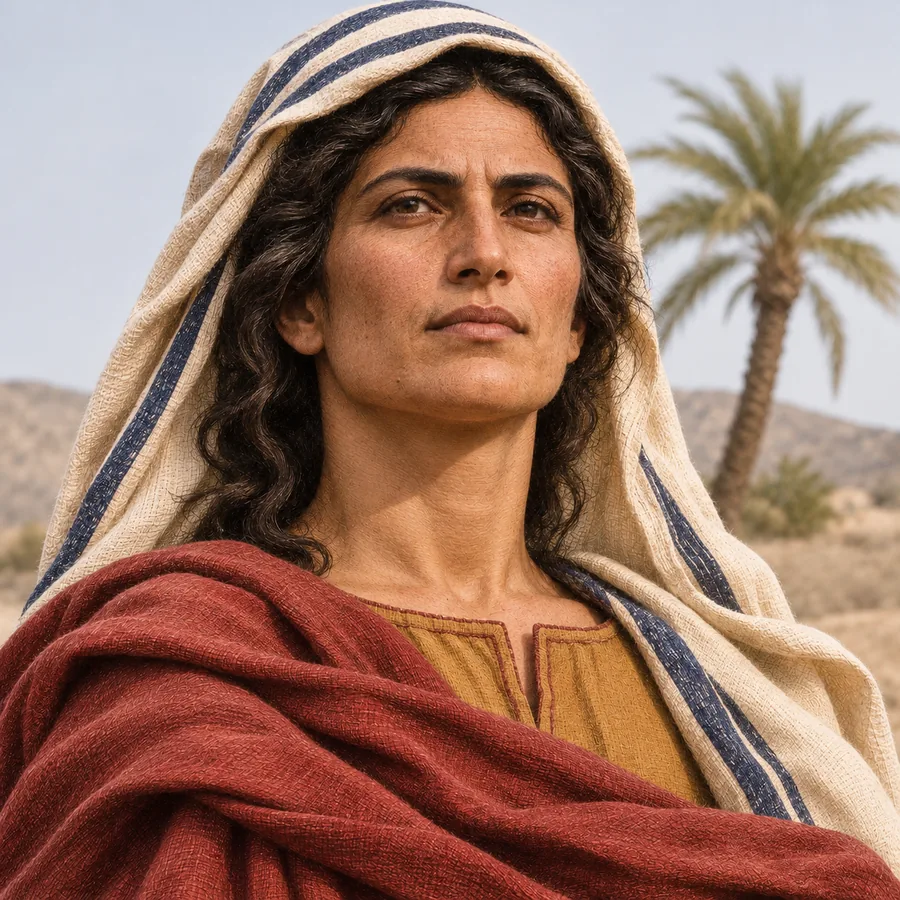

In Judges 4–5, a prophetess who judges Israel; she summons Barak against Sisera's army and sings the song of victory.
See Judges 4:4, Judges 4:6, Judges 5:1.
 A palm tree marks Deborah in the reading view: she sat under the palm tree of Deborah, where Israel came to her for judgment (Judges 4:5).
Mentioned in 9 verses, first in Judges 4:4. The verses below are the ones linked to this person (the Theographic dataset, with our sourced corrections).
How artists have pictured her
3 works from different centuries and traditions. Each shows how its time and place imagined Deborah, not how she looked.


In the Bible
All 9 verses, in Bible order. Text from the Berean Standard Bible; verse numbers follow the KJV.
Judges
- Judges 4:4
Now Deborah, a prophetess, the wife of Lappidoth, was judging Israel at that time.
- Judges 4:5
And she would sit under the Palm of Deborah between Ramah and Bethel in the hill country of Ephraim, where the Israelites would go up to her for judgment.
- Judges 4:9
“I will certainly go with you,” Deborah replied, “but the road you are taking will bring you no honor, because the LORD will be selling Sisera into the hand of a woman.” So Deborah got up and went with Barak to Kedesh,
- Judges 4:10
where he summoned Zebulun and Naphtali. Ten thousand men followed him, and Deborah also went with him.
- Judges 4:14
Then Deborah said to Barak, “Arise, for this is the day that the LORD has delivered Sisera into your hand. Has not the LORD gone before you?” So Barak came down from Mount Tabor with ten thousand men following him.
- Judges 5:1
On that day Deborah and Barak son of Abinoam sang this song:
- Judges 5:7
Life in the villages ceased; it ended in Israel, until I, Deborah, arose, a mother in Israel.
- Judges 5:12
‘Awake, awake, O Deborah! Awake, awake, sing a song! Arise, O Barak, and take hold of your captives, O son of Abinoam!’
- Judges 5:15
The princes of Issachar were with Deborah, and Issachar was with Barak, rushing into the valley at his heels. In the clans of Reuben there was great indecision.
Events
Events the dataset lists Deborah as taking part in. Dates follow its Ussher–Jones reckoning (one of several traditional counts), not established history.
- c. 1278 BCDeliverance by Barak And Deborah
Dictionary
From Easton’s Bible Dictionary (1897), as attached to this record by Theographic. The entry is for the name and can describe more than one person who bore it. Easton wrote in 1897, and some of his views are now debated.
Read Easton’s entry
A prophetess, “wife” (woman?) of Lapidoth. Jabin, the king of Hazor, had for twenty years held Israel in degrading subjection. The spirit of patriotism seemed crushed out of the nation. In this emergency Deborah roused the people from their lethargy. Her fame spread far and wide. She became a “mother in Israel” (Judg. 4:6, 14; 5:7), and “the children of Israel came up to her for judgment” as she sat in her tent under the palm tree “between Ramah and Bethel.” Preparations were everywhere made by her direction for the great effort to throw off the yoke of bondage. She summoned Barak from Kadesh to take the command of 10,000 men of Zebulun and Naphtali, and lead them to Mount Tabor on the plain of Esdraelon at its north-east end. With his aid she organized this army. She gave the signal for attack, and the Hebrew host rushed down impetuously upon the army of Jabin, which was commanded by Sisera, and gained a great and decisive victory. The Canaanitish army almost wholly perished. That was a great and ever-memorable day in Israel. In [Judg. 5](/judg#Judg.5) is given the grand triumphal ode, the “song of Deborah,” which she wrote in grateful commemoration of that great deliverance. (See LAPIDOTH, JABIN [2].)