Person
Elisha
Also called Eliseus
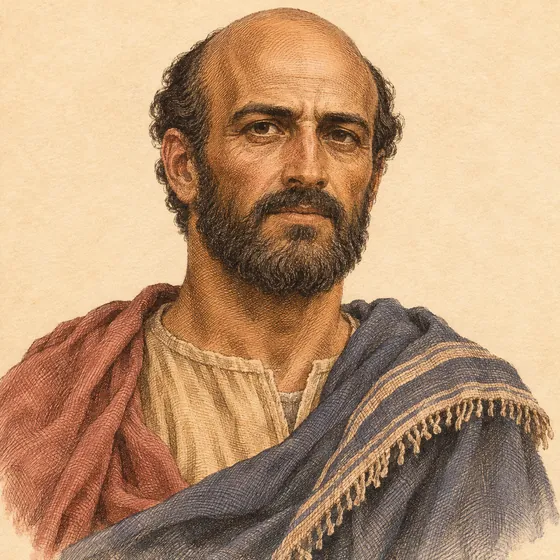
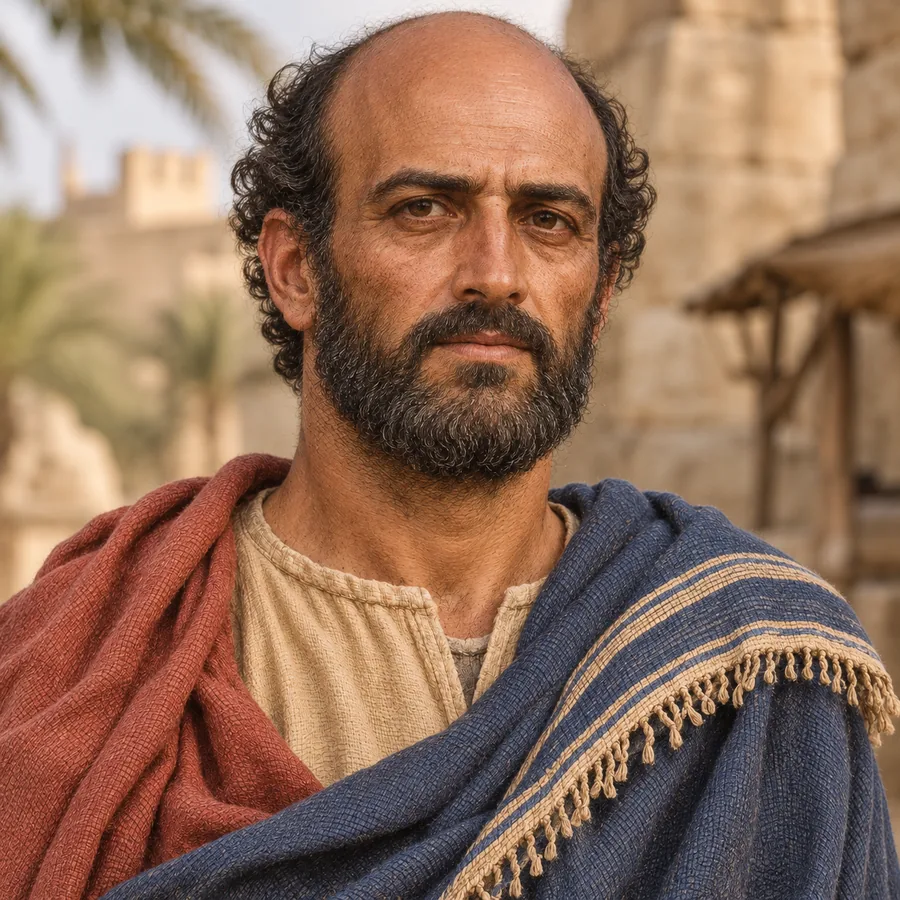

In 1–2 Kings, Elijah's successor, who takes up his cloak and works many miracles, including raising a boy and healing Naaman.
See 2 Kings 2:13, 2 Kings 4:35, 2 Kings 5:14.
 A prophet's cloak marks Elisha in the reading view: he took up the mantle of Elijah that fell from him (2 Kings 2:13).
Mentioned in 53 verses across 3 books, first in 1 Kings 19:16. The verses below are the ones linked to this person (the Theographic dataset, with our sourced corrections).
How artists have pictured him
3 works from different centuries and traditions. Each shows how its time and place imagined Elisha, not how he looked.


In these stories
In the Bible
The first 10 of 53 verses, in Bible order. Text from the Berean Standard Bible; verse numbers follow the KJV.
1 Kings
- 1 Kings 19:16
You are also to anoint Jehu son of Nimshi as king over Israel and Elisha son of Shaphat from Abel-meholah to succeed you as prophet.
- 1 Kings 19:17
Then Jehu will put to death whoever escapes the sword of Hazael, and Elisha will put to death whoever escapes the sword of Jehu.
- 1 Kings 19:19
So Elijah departed and found Elisha son of Shaphat. He was plowing with twelve teams of oxen, and he was with the twelfth team. Elijah passed by him and threw his cloak around him.
2 Kings
- 2 Kings 2:1
Shortly before the LORD took Elijah up to heaven in a whirlwind, Elijah and Elisha were on their way from Gilgal,
- 2 Kings 2:2
and Elijah said to Elisha, “Please stay here, for the LORD has sent me on to Bethel.” But Elisha replied, “As surely as the LORD lives and as you yourself live, I will not leave you.” So they went down to Bethel.
- 2 Kings 2:3
Then the sons of the prophets at Bethel came out to Elisha and said, “Do you know that the LORD will take your master away from you today?” “Yes, I know,” he replied. “Do not speak of it.”
- 2 Kings 2:4
And Elijah said to Elisha, “Please stay here, for the LORD has sent me on to Jericho.” But Elisha replied, “As surely as the LORD lives and as you yourself live, I will not leave you.” So they went to Jericho.
- 2 Kings 2:5
Then the sons of the prophets at Jericho came up to Elisha and said, “Do you know that the LORD will take your master away from you today?” “Yes, I know,” he replied. “Do not speak of it.”
- 2 Kings 2:9
After they had crossed over, Elijah said to Elisha, “Tell me, what can I do for you before I am taken away from you?” “Please, let me inherit a double portion of your spirit,” Elisha replied.
- 2 Kings 2:12
As Elisha watched, he cried out, “My father, my father, the chariots and horsemen of Israel!” And he saw Elijah no more. So taking hold of his own clothes, he tore them in two.
Events
Events the dataset lists Elisha as taking part in. Dates follow its Ussher–Jones reckoning (one of several traditional counts), not established history.
- c. 897 BCProphecies of Elisha
Dictionary
From Easton’s Bible Dictionary (1897), as attached to this record by Theographic. The entry is for the name and can describe more than one person who bore it. Easton wrote in 1897, and some of his views are now debated.
Read Easton’s entry
God his salvation, the son of Shaphat of Abel-meholah, who became the attendant and disciple of Elijah (1 Kings 19:16-19). His name first occurs in the command given to Elijah to anoint him as his successor (1 Kings 19:16). This was the only one of the three commands then given to Elijah which he accomplished. On his way from Sinai to Damascus he found Elisha at his native place engaged in the labours of the field, ploughing with twelve yoke of oxen. He went over to him, threw over his shoulders his rough mantle, and at once adopted him as a son, and invested him with the prophetical office (comp. Luke 9:61, 62). Elisha accepted the call thus given (about four years before the death of Ahab), and for some seven or eight years became the close attendant on Elijah till he was parted from him and taken up into heaven. During all these years we hear nothing of Elisha except in connection with the closing scenes of Elijah’s life. After Elijah, Elisha was accepted as the leader of the sons of the prophets, and became noted in Israel. He possessed, according to his own request, “a double portion” of Elijah’s spirit (2 Kings 2:9); and for the long period of about sixty years (B.C. 892-832) held the office of “prophet in Israel” (2 Kings 5:8).
After Elijah’s departure, Elisha returned to Jericho, and there healed the spring of water by casting salt into it (2 Kings 2:21). We next find him at Bethel (2:23), where, with the sternness of his master, he cursed the youths who came out and scoffed at him as a prophet of God: “Go up, thou bald head.” The judgment at once took effect, and God terribly visited the dishonour done to his prophet as dishonour done to himself. We next read of his predicting a fall of rain when the army of Jehoram was faint from thirst (2 Kings 3:9-20); of the multiplying of the poor widow’s cruse of oil (4:1-7); the miracle of restoring to life the son of the woman of Shunem (4:18-37); the multiplication of the twenty loaves of new barley into a sufficient supply for an hundred men (4:42-44); of the cure of Naaman the Syrian of his leprosy (5:1-27); of the punishment of Gehazi for his falsehood and his covetousness; of the recovery of the axe lost in the waters of the Jordan (6:1-7); of the miracle at Dothan, half-way on the road between Samaria and Jezreel; of the siege of Samaria by the king of Syria, and of the terrible sufferings of the people in connection with it, and Elisha’s prophecy as to the relief that would come (2 Kings 6:24-7:2).
We then find Elisha at Damascus, to carry out the command given to his master to anoint Hazael king over Syria (2 Kings 8:7-15); thereafter he directs one of the sons of the prophets to anoint Jehu, the son of Jehoshaphat, king of Israel, instead of Ahab. Thus the three commands given to Elijah (9:1-10) were at length carried out.
We do not again read of him till we find him on his death-bed in his own house (2 Kings 13:14-19). Joash, the grandson of Jehu, comes to mourn over his approaching departure, and utters the same words as those of Elisha when Elijah was taken away: “My father, my father! the chariot of Israel, and the horsemen thereof.”
Afterwards when a dead body is laid in Elisha’s grave a year after his burial, no sooner does it touch the hallowed remains than the man “revived, and stood up on his feet” (2 Kings 13:20-21).